
Top Places to Visit in Calatagan
Calatagan is a quiet town in Batangas known for its beautiful beaches and relaxing tourist spots. This blog highlights some popular places to visit, perfect for travelers looking for a peaceful getaway.
10/29/20254 min read
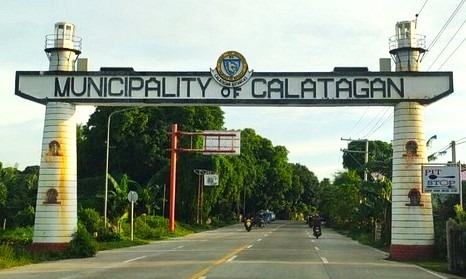
Calatagan is a coastal municipality in Batangas known for its rich land and ocean resources. It is surrounded by fertile land used for farming and clear seas that support fishing and marine life. Calatagan has a deep history influenced by early Filipino settlements and Spanish colonization, which can still be seen in its traditions and historical sites. Its location along the coast makes it an ideal place for beach tourism, offering scenic shorelines, sandbars, and a peaceful environment. The people of Calatagan live simple and hardworking lives, with fishing, farming, and tourism as their main sources of livelihood, while maintaining strong community values and respect for nature.
Welcome to Calatagan
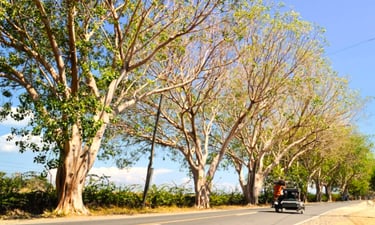
Calatagan Rubber Trees
Lining the national Highway of Calatagan, Batangas, the iconic rubber trees (Ficus elastica, also known as Indian Rubber Trees, create a lush, tunnel-like canopy that welcomes travelers heading to town's beaches and resorts. With its massive trunks and dense green foliage, these trees offer a scenic roadside view and popular photo spot, often shared on social media. More than just a beautiful landscape, the Calatagan rubber trees serve as a natural landmark and a memorable symbol of town's relaxed, tropical charm.

Sto. Domingo de Silos Parish
The Santo Domingo de Silos Parish Church in Calatagan, Batangas was established in 1913 and has served the town's spiritual center for over a century. Dedicated to St. Dominic of Silos, an 11th-century Benedictine monk, the church reflects the deep faith and traditions of the Calatagueños. Though modest in size, it holds strong historical and cultural value, with its patron honored every April 30 through masses and festive celebrations that continue to unite the community and preserve its local heritage.
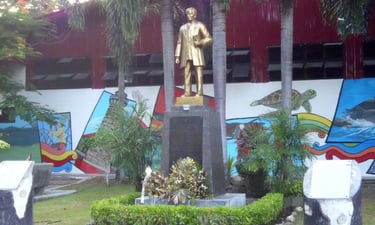
Calatagan Town Plaza
Calatagan Town Plaza, also known as Plaza de Bayan, is the lively heart of Calatagan, Batangas and a central gathering place for the community. Surrounded by historic landmarks such as the Sto. Domingo de Silos Parish Church, the Municipal Hall, and ancestral homes linked to the Roxas-Zobel legacy, the plaza reflects the town's rich history and everyday local life. Shaded by large acacia tree and marked by historical monuments, it serves as a venue for cultural events, relaxation and social gatherings, while also acting as a welcoming gateway to Calatagan's well known beaches and heritage sites.
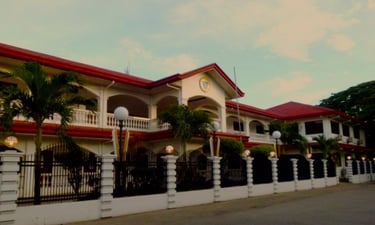
Municipal Hall
Calatagan Municipal Hall stands as a symbol of the town’s long and layered history. Its roots trace back to the vast Hacienda de Calatagan, once owned by the Roxas–Zobel families, which shaped the area into a thriving sugar-producing community. Calatagan became an independent municipality in 1911, separating from Balayan, and its local government evolved from early Municipal Presidents to elected Mayors. Historic landmarks such as the original brick courthouse reflect this growth, while the famous Calatagan Excavations reveal the town’s pre-Hispanic past and role in early trade. Though records on the current municipal hall’s construction are limited, it remains a lasting representation of Calatagan’s political, social, and cultural development.
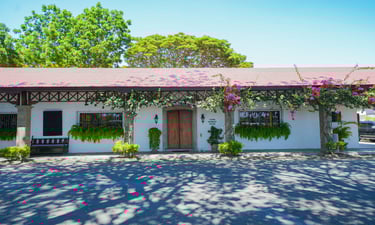
Enrique Zobel Museum
The Calatagan–Enrique Zobel Museum offers a glimpse into the town’s rich cultural and historical heritage. Named after Enrique Zobel, a key figure connected to Calatagan’s past as part of the vast Hacienda de Calatagan, the museum showcases artifacts, photographs, and exhibits that highlight the area’s pre-Hispanic roots, Spanish-era influences, and transformation from a private estate into a thriving municipality. Serving as both a cultural landmark and educational space, the museum preserves Calatagan’s story for locals and visitors alike.
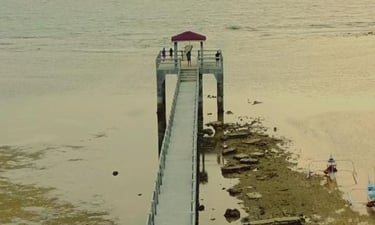
Calatagan Boardwalk
The Calatagan Boardwalk reflects the town’s transition from private coastal estates to a growing tourism destination. Unlike ancient landmarks, its story is rooted in modern ecotourism and community development. Around 2009–2010, a mangrove boardwalk and watchtower were built in Barangay Quilitsan with the support of Conservation International to protect mangroves and provide livelihood for local residents. More recently, the commercial BoardWalk by Lago de Oro marked a new phase of organized tourism, signaling Calatagan’s evolution from its past as the “Forbes Park of the South” into an emerging coastal getaway in Batangas.

Cape Santiago
Cape Santiago in Calatagan, Batangas is a historic coastal landmark best known for the Cape Santiago Lighthouse (Faro de Cabo Santiago)—the oldest working lighthouse in the province. Built by the Spanish in 1890, its iconic red brick tower once guided ships through the Verde Island Passage toward Manila Bay. Located at the southwestern tip of Luzon, Cape Santiago offers sweeping views of the sea, nearby beaches, and a glimpse into the country’s colonial maritime history, making it a must-visit heritage and sightseeing spot in Calatagan.